

The best times to visit Japan are spring (March to May) for cherry blossoms and fall (September to November) for vibrant fall foliage, both offering pleasant weather and stunning scenery. Spring's sakura season is iconic, but autumn often feels less crowded and just as striking, with fiery colors across temples, mountains, and gardens. Winter (December to February) appeals to skiers and onsen lovers, while summer (June to August) brings lively festivals and hiking opportunities despite the heat.
Seasonal Planning for Japan Travel
Japan is a country you can enjoy year-round, but spring and fall are especially popular for first-time visitors. The country bursts into color from March to May with cherry blossoms drawing travelers to Tokyo and Kyoto for hanami (flower-viewing) picnics and seasonal festivals. The weather is generally mild, making exploring temples, gardens, and city streets a comfortable time. From mid-September to November, the landscapes shift into warm shades of red and gold. Crisp, clear days make it perfect for sightseeing (with fewer crowds), and destinations like Kyoto's temples, Nikko, and the Japanese Alps are at their most beautiful.
If you're looking for a different kind of adventure, summer and winter also have their appeal. June through August can be hot and humid in the cities, but it's a fantastic season for mountain hikes, colorful festivals, and lavender fields in Hokkaido. From December to February, travelers head to Hokkaido and Nagano for world-class skiing and snowboarding, while onsen towns across Japan offer a cozy escape. Winter illuminations in major cities also add a festive glow to the season.
Japan has four general regions with different climates:
- Hokkaido / Northern Honshu
- Central Honshu
- Western Honshu / Shikoku / Kyushu
- Okinawa
For ideas on Japan trip-planning, check out these tours and itineraries.
Seasons
Pros
Cons
Best for
Where to Visit
Spring (Mar-May)
Mild weather; iconic scenery (cherry blossoms)
Crowded and expensive. Hotels book up in advance due to the cherry blossom season (avoid Golden Week, the last week in April)
Cherry blossom viewing
Higashiyama district (Kyoto) and Ueno Park (Tokyo) for blossoms
Summer (Jun-Aug)
Festival season begins; fewer foreign visitors; decent hotel prices
Hot, humid, and wet (June rainy season and August typhoon season)
Outdoor activities (hiking), festivals
Japanese Alps, national parks, northern Japan, Okinawa
Fall (Sep-Nov)
Long cool days and dry weather; pretty fall foliage
Crowds, costlier accommodation, and flight rates
Outdoor activities, foliage gazing
Kyoto, Nara, Japanese Alps, Nikko, Hiroshima
Winter (Dec-Feb)
Less crowded; excellent skiing/snowboarding conditions
Cold weather
Winter sports and festivals
Nagano, Hokkaido
Spring in Japan (March to May)
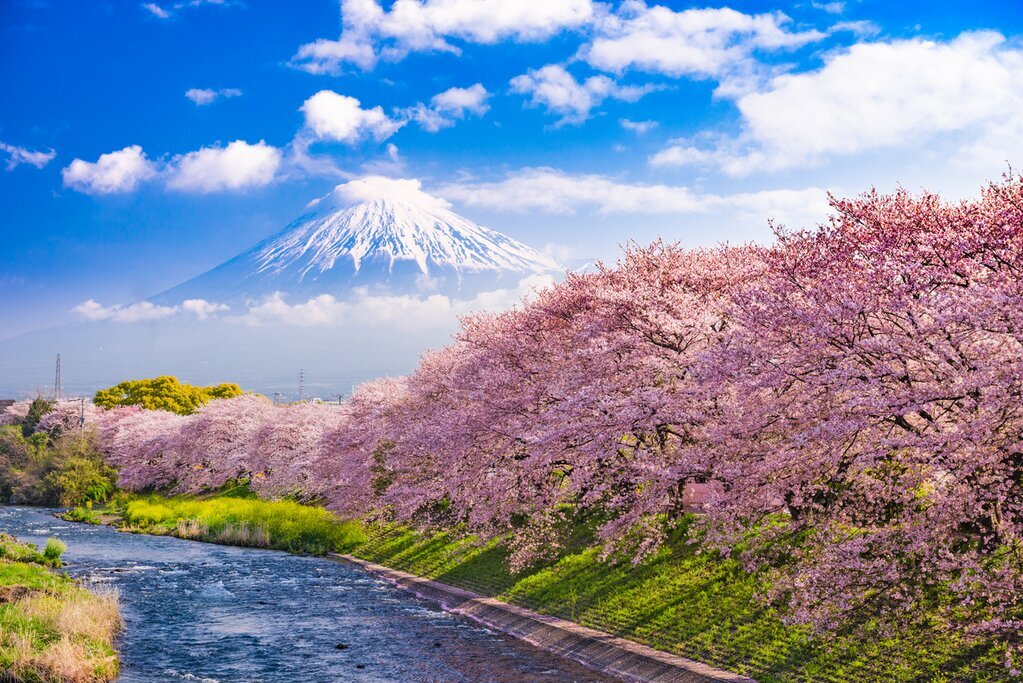
If you time your spring visit right, you'll be welcomed by pretty views of sakura blooms, like these trees along the Urui
Spring is sakura season in Japan when cherry blossoms bloom across the country. They start in the south in Kyushu and work their way up north, finally blooming around early May in Hokkaido. The weather is quite variable in spring, and if you're lucky, you can see snow falling on cherry blossoms.
The pleasant weather and the beautiful flowers make this the most crowded time to visit Japan, especially on the main island of Honshu. it's crucial to book accommodation, transport, and even meals in advance during this season, as many hotels, trains, buses, and restaurants will be fully booked. If you have your heart set on seeing the cherry blossoms but don't want to be in a massive crowd, you can choose to visit sights during off-peak hours or go a bit off the beaten path; virtually everywhere on the four main islands of Japan has amazing cherry blossom viewing spots.
- Hokkaido / Northern Honshu. It often snows in Hokkaido until April or early May, with temperatures in Sapporo averaging 52°F (11°C).
- Central Honshu. Peak travel season with heavy crowds. Daytime temperatures in Tokyo and Kyoto are around 55°F (13°C).
- Western Honshu / Shikoku / Kyushu. Kyushu sees the first cherry blossoms of the season, usually in mid-March. Fukuoka temperatures are around 60°F (15°C).
- Okinawa. Spring is a great time to visit Okinawa, although some may prefer ocean swimming with a wetsuit. Naha temperatures in April are around 70°F (21°C).
Events in Spring
Hanami, Nationwide (March-April). Cherry trees bloom from mid-March, sweeping up the country into April. Hanami, or cherry blossom viewing parties, are a favorite annual pastime for many Japanese people, from kids to suited businessmen.
Golden Week, Nationwide (late April-early May). This collection of four holidays falls within a week, from April 29 to May 5. These holidays are Showa Day, Constitution Day, Greenery Day, and Children's Day. Various events are held in observance of these individual holidays, and many people take the full week off work in order to maximize their time off.
Sanja Matsuri, Tokyo. Held in the old Tokyo neighborhood of Asakusa, this Shinto festival is one of the largest in Japan. More than 100 portable shrines are paraded through the streets over three days, attracting over two million visitors.
